HVAC Advertising Tracking Numbers: Stop Wasting Your Ad Budget in 2026
Stop guessing if your ads work. Use hvac advertising tracking numbers to see which campaigns drive calls and prove your ROI. Capture every lead, even in a cr...
 FieldLine Team15 min read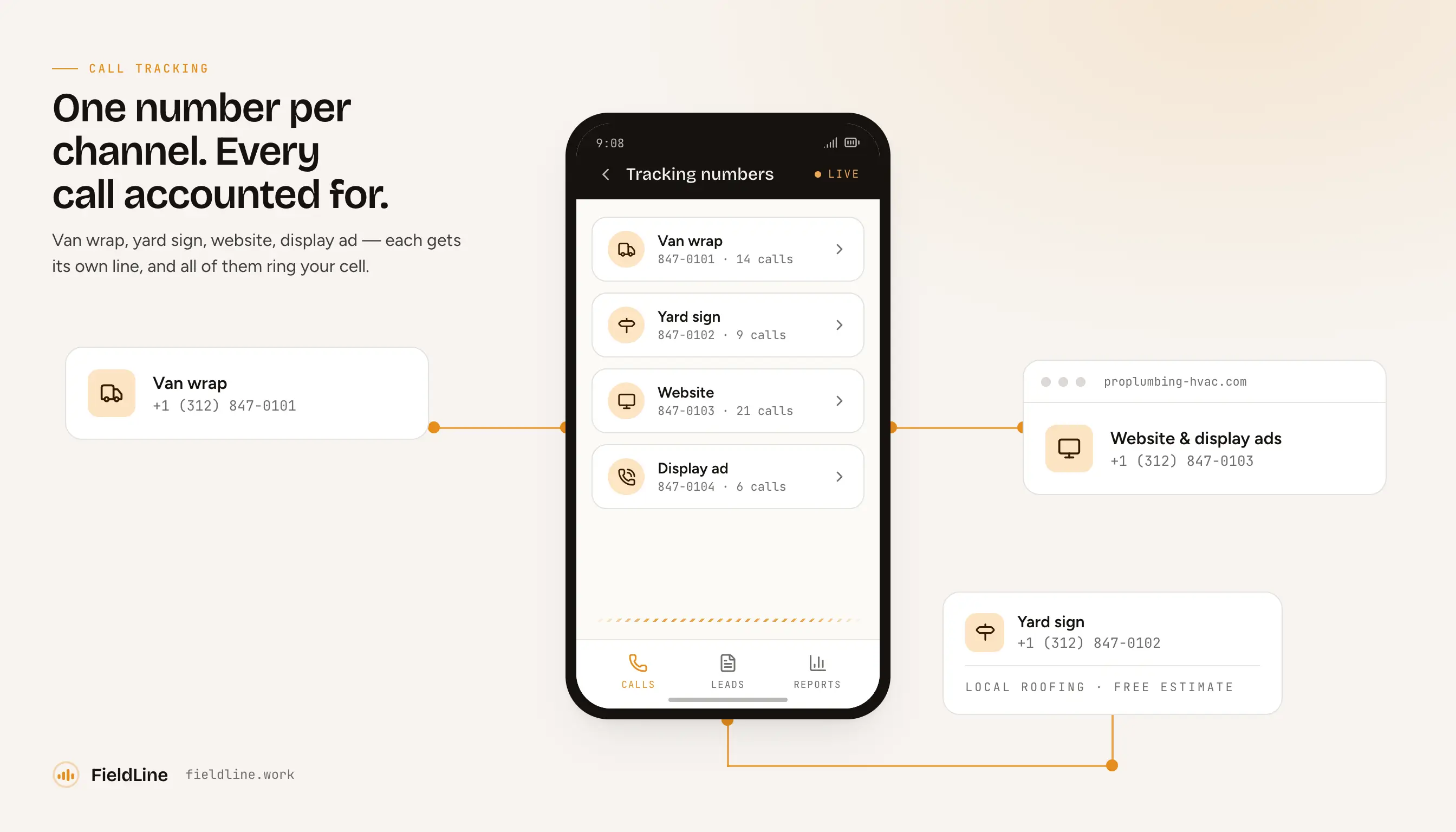
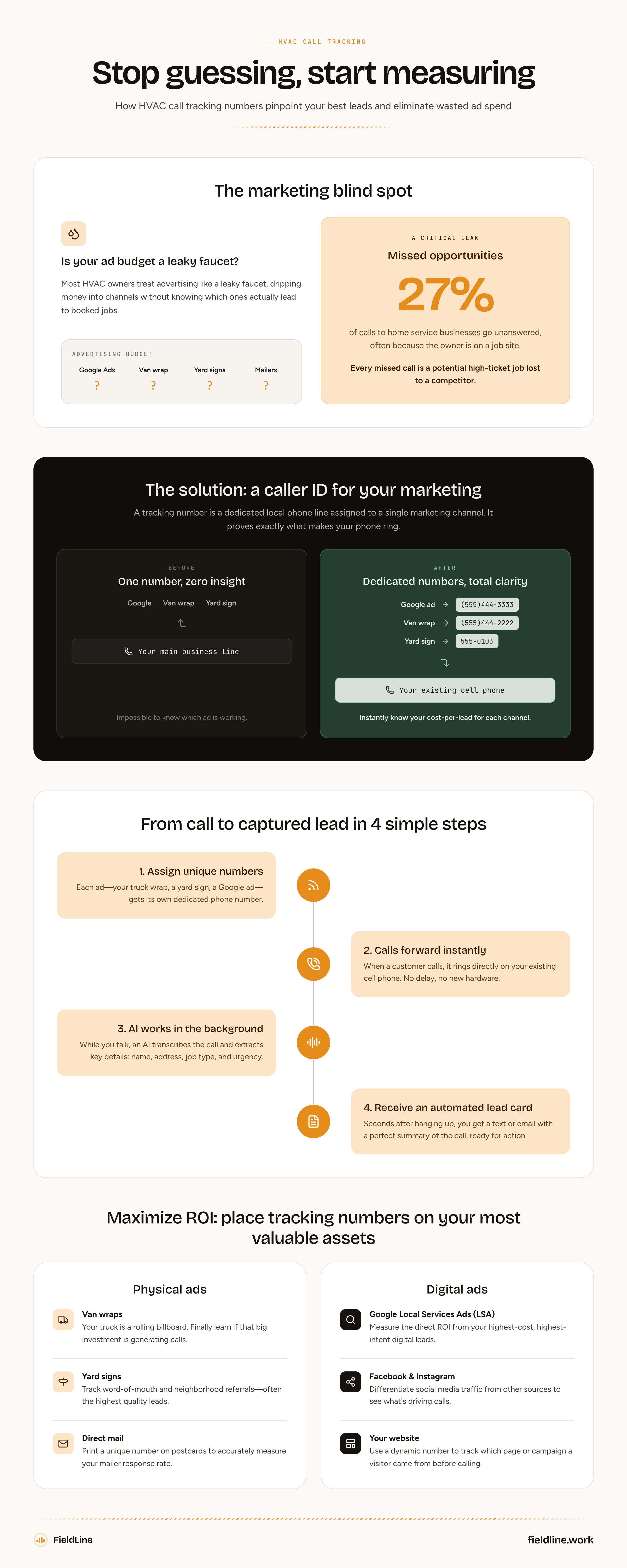
27% of calls in home services go unanswered. At 7:12am, you are likely loading the van or diagnostic testing a Carrier furnace. You don't have time to play secretary. Every missed call is a $153 lead gone to the guy down the street. It is hard to tell if your Facebook ads or your truck wraps are actually working. You are tired of wasting money on marketing that feels like a black hole. Using dedicated hvac advertising tracking numbers changes that. It turns your phone into a precision tool.
You want clear proof of which ads drive revenue. You need a way to capture lead details without forcing your crew to use a bloated CRM. This article explains how to use tracking numbers to capture every lead and measure your exact ROI. We will cover how AI creates lead cards automatically and how to route calls directly to your existing cell phone. You will learn to stop the budget leaks and start growing with data you can actually trust.
Key takeaways
- Assign unique local lines to every Google campaign, Facebook post, and yard sign to see exactly which ads make the phone ring.
- Use hvac advertising tracking numbers to measure the clear ROI of your truck wraps without guessing where your leads are coming from.
- Build a zero-app workflow that routes calls to your existing phone so your crew doesn't have to learn complex CRM software.
- Capture caller details automatically with AI-generated lead cards that transcribe recordings while you are working in a crawlspace.
- Stop wasting your 2026 marketing budget on channels that don't result in booked jobs or revenue.
Table of Contents
What are hvac advertising tracking numbers?
You see a phone number on a yard sign. It looks like a standard local line. It has the right area code. But that number is a dedicated tool used only for that specific marketing channel. Using hvac advertising tracking numbers allows you to assign a unique line to every source. You put one on Google Ads. You put another on Facebook. You put a third on the magnet on the side of the van. When the phone rings at 7:12am while you are loading the truck, you know exactly which ad prompted the call.
These numbers look standard to the customer. They route calls through a tracking platform first. This identifies the specific ad that triggered the call before forwarding it to your existing cell phone. It is essential for calculating your cost-per-lead. If you don't know which channel is making the phone ring, you are likely wasting a large portion of your budget on dead leads.
The difference between a business line and a tracking line
Your main business line is your shop's identity. It is on your business cards and saved in your long-term customers' phones. It is for general talk and repeat business. Tracking lines are different. They are functional, measurable, and built for specific campaigns. They route calls through Call-tracking software to capture data. This happens instantly. You don't need a new phone or a second SIM card. These lines allow for automated recording and AI transcription without changing how you answer the phone. Using one number for everything makes it impossible to scale. You cannot grow what you cannot measure.
Why hvac shops need these in 2026
Ad costs are climbing every year. In 2026, you cannot afford to guess if your yard signs are actually working while you are busy in a crawlspace. 27% of calls in home services go unanswered because the crew is under a house or driving between jobs. Implementing hvac advertising tracking numbers ensures those missed opportunities are logged along with their source. You need to know if that $2,000 you spent on Facebook resulted in five calls or fifty. If you are diagnosing a Carrier furnace, you use a multimeter to find the fault. You don't guess. Your marketing should be the same. Call tracking is the odometer for your advertising budget. It tells you exactly how far your money is going. Without it, you are just burning fuel. You can find a plan that fits your crew size on the FieldLine pricing page.
How dedicated numbers turn marketing into jobs
Assigning unique numbers to your ads is not about making fancy reports. It is about precision. You give your Google LSA ads one number. Your Facebook campaign gets another. The wrap on your service truck gets a third. When a call comes in, you know exactly which investment is paying off before you even pick up. This level of clarity is the importance of call tracking for small businesses that want to grow without wasting cash. You stop guessing and start spending where the revenue is actually happening.
The system is built for the field. Calls are forwarded instantly to your existing cell phone. You don't need a second device or new hardware. While you are on a tailgate or driving between jobs, the hvac advertising tracking numbers work in the background. AI records the call and transcribes the conversation. It extracts the caller's name, the service address, and the specific issue they are facing. You get a clean lead card delivered to your phone, turning a simple conversation into an actionable job file.
Attributing calls to high-intent sources
Imagine a "no heat" call coming in at 2 AM. Without tracking, you don't know if that customer found you through a high-cost Google LSA ad or a postcard you mailed out six months ago. Tracking numbers link that high-intent lead to the exact source. You can compare the quality of leads from direct mail versus social media ads. If your Facebook leads are mostly tire-kickers but your LSA leads are booked jobs, you can shift your budget immediately. You double down on what works. You cut what does not.
Automated lead extraction and summary
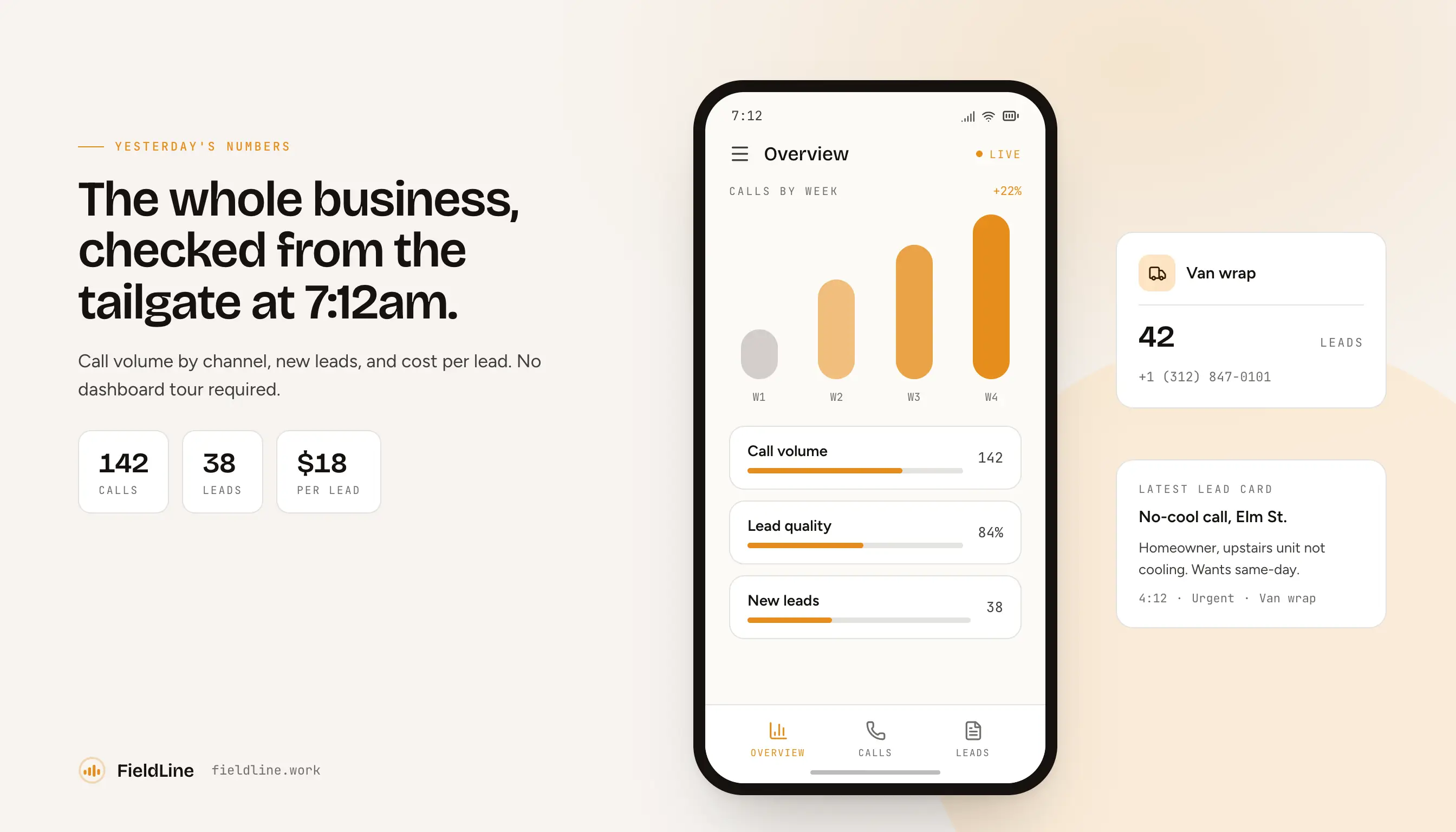
You don't have time to listen to 10-minute call recordings to find an address. AI creates a 2-3 sentence summary of every call automatically. It identifies equipment details, such as a failing blower motor or an old compressor, before you even pull up to the house. It also flags urgency levels. This ensures no lead falls through the cracks, even if the caller is in a rush and doesn't leave a formal voicemail. Every answered call becomes a permanent record of potential revenue. You can see how this fits into your daily workflow on the FieldLine for HVAC page.
Where to place your tracking numbers for maximum ROI
You have the tools. Now you need to deploy them. Tracking numbers belong anywhere you spend a dollar or a minute of your time. This goes beyond just digital ads. In fact, some of your most valuable leads come from the physical world. By tracking the results of your marketing across every channel, you can see exactly where your phone calls originate. You stop guessing and start measuring.
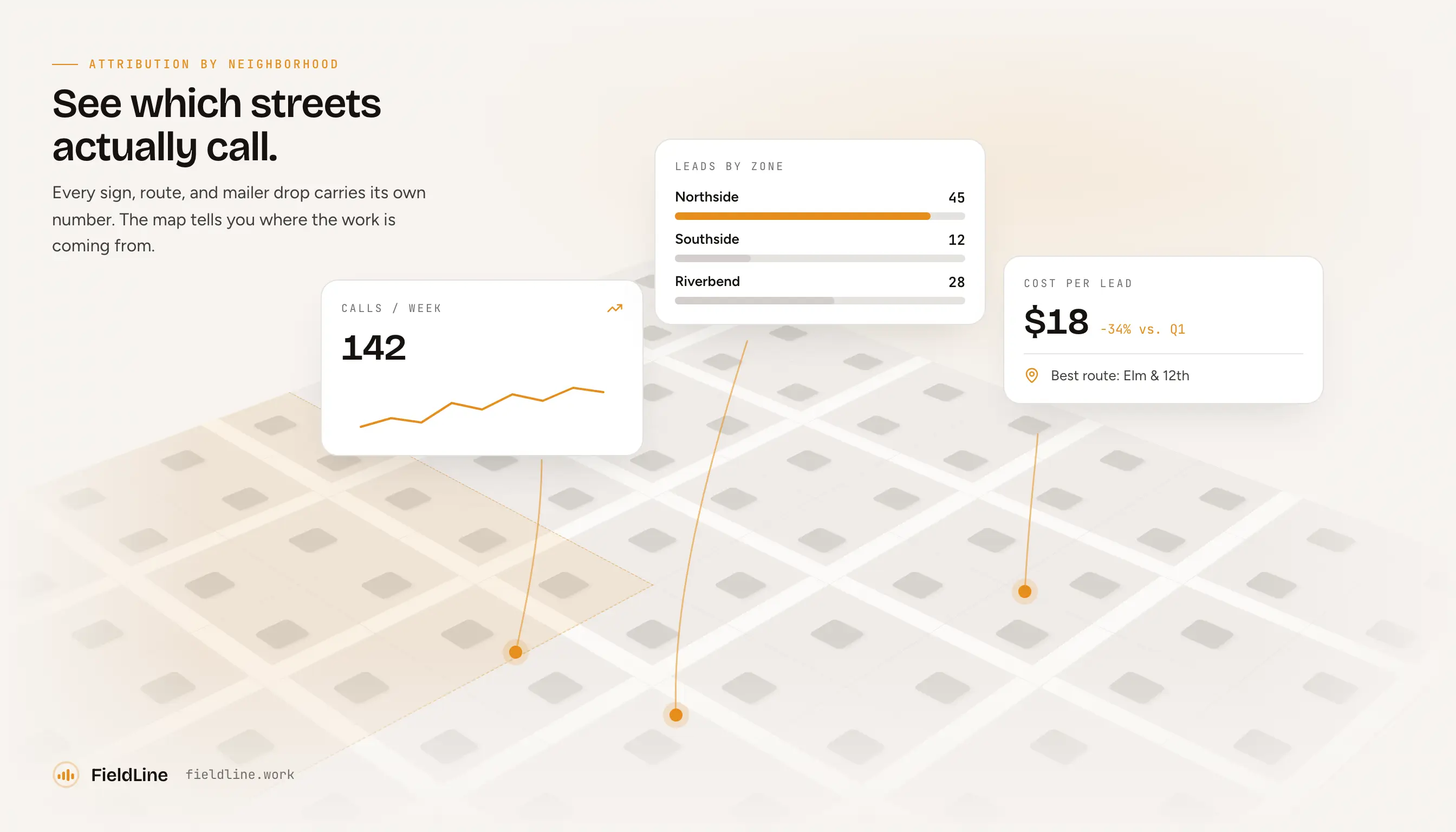
Yard signs are often the most undervalued lead source for small HVAC crews. You finish a job, stake a sign in the lawn, and move to the next house. Use a specific number for those signs. This allows you to track neighborhood referrals with precision. If you are working on a Carrier furnace in one house, and the neighbor calls three days later, you will know the sign did the work. It is proof that your presence on that street matters.
Van wraps are another major investment. A high-quality wrap is a rolling billboard. But did it pay for itself? Assigning a dedicated number to your vehicle fleet helps justify the cost of those graphics. You can also use local area codes for these numbers. This builds immediate trust in specific service zones. People like hiring the guy who looks like a local fixture, not a national franchise. Digital placements are just as critical:
- Google Local Services Ads (LSA): These leads can cost between $25 and $80 each. You need hvac advertising tracking numbers to ensure you are only paying for high-quality inquiries.
- Direct Mail: Print a unique number on your postcards. It is the only way to measure the response rate of a local mailer.
- Social Media: Track Facebook and Instagram inquiries separately from your search engine traffic. This stops you from overspending on social ads that might just be getting "likes" instead of booked jobs.
Physical vs. digital attribution
Physical assets like yard signs and truck wraps provide long-term visibility. Digital ads provide immediate leads. Tracking both allows you to balance your budget. If your van wraps are driving more calls than your Facebook ads, you might decide to wrap another truck instead of increasing your social spend. It is about putting your money where the phone actually rings. You want to see the exact return on every dollar spent.
Dynamic Number Insertion (DNI) for your website
Your website needs to be smart too. Call tracking software often uses Dynamic Number Insertion (DNI). This technology swaps the phone number on your site based on how the user found you. If a customer clicks a Google Ad, they see one number. If they find you through organic search, they see another. This connects website visitors to their original search keywords. You can see which specific services people are looking for before you even answer the call. For more specialized tools, check out these HVAC marketing solutions.
Setting up a lead system without a complex CRM
You don't need a heavy, expensive field service management platform to run an efficient shop. Many of these corporate systems are built for massive franchises with dedicated office staff. For a shop with 2 to 15 techs, they often become a digital anchor that slows down operations. Your crew is in crawlspaces or on tailgates at 7:12am. They don't want to navigate through dozens of menus just to log a customer's phone number or find an address. You need a system where the information finds you, not the other way around. The goal is a workflow that requires no extra apps and no training.
Using hvac advertising tracking numbers allows you to build a professional lead system that stays out of your way. Instead of manual data entry, the system creates a record the moment the phone rings. This data follows the call without requiring your team to change their daily habits. It acts as an invisible office assistant that ensures every inquiry is captured, summarized, and ready for action. You get the benefits of a high-end tracking suite without the bloat of a traditional CRM. This keeps your overhead low and your response times fast.
Routing calls to the right truck
You can assign specific lines to different crews or service types to keep your operations orderly. If one truck specializes in maintenance and another in emergency repairs, give them unique numbers on their magnets or yard signs. This ensures the right specialist gets the call first, improving your booking rate. It also provides a clear view of crew performance. You can see which technicians are responsive and which ones are letting potential revenue slip away. It is accountability without the micromanagement. You can see exactly which service zones are most active by looking at the call volume on each line.
Lead cards: the practical workspace
Lead cards replace the scribbled notes on clipboards that inevitably get lost under the seat of the van. Every call generates a card with the name, address, and equipment details like a vibrating Carrier furnace or a faulty blower motor. You have the full context before you even pull the truck into the driveway. These cards act as your daily punch list. You can see your active leads on one screen and know exactly who needs a follow-up. This keeps your day moving forward without the friction of a complex interface. Check the pricing for small crews to see how this fits your budget.
FieldLine: the phone line built for the service truck
FieldLine is the phone line that runs the business. It is a specialized instrument designed specifically for home-services operators. Many hvac advertising tracking numbers are offered by corporate providers who don't understand the daily grind of a service truck. They often bury their most useful features behind expensive enterprise tiers. FieldLine includes AI transcription and summarization on every plan. Whether you are on the $35 monthly Starter plan or the $287 Scale plan, you get automated lead cards. These cards capture caller names, service addresses, and urgency levels instantly. You get the data you need without paying for a bloated software suite.
Setting up your account takes two minutes. You pick a local US number and route it to your cell phone. There is no new hardware to buy. There are no apps to install. You can start tracking your marketing ROI while you are loading your van at 6:45am. FieldLine operates on a month-to-month basis with no setup or cancellation fees. There are no long-term contracts to sign. You can start with a 7-day free trial to see how the system handles your incoming calls. It is a pragmatic solution for people who value results over flashy marketing metrics.
Why hvac owners prefer FieldLine
FieldLine was built for home-services operators who need simplicity. It recognizes that 27% of calls in this industry go unanswered because you are busy in a crawlspace or diagnostic testing a Trane unit. Large platforms like CallRail are powerful for marketing agencies but can be too complex for a crew of 2 to 15 techs. FieldLine focuses on the "No-App" workflow. Leads are delivered directly to the phone already in your pocket. You get a notification with a 2-3 sentence summary of the call. It removes the mental load of listening to long recordings while you are sitting on your tailgate between jobs. It is a steady hand for a high-pressure environment.
Getting started with your first tracking number
Choosing your first number is the first step toward stopping budget leaks. Pick a local area code for your most active campaign, such as your Google LSA or your latest batch of yard signs. Assign the line to your cell phone and watch the AI lead cards generate in real time. You will see exactly which ads are making the phone ring before you even pull up to the next house. This clarity allows you to stop wasting money on dead channels and double down on what works. FieldLine also provides call tracking for plumbers and trades who want to manage their growth with data they can trust. It turns your phone into a lead-capture machine.
Take control of your 2026 marketing budget
Stop guessing which yard sign or Facebook ad made the phone ring at 7:12am. You are too busy diagnostic testing a Carrier furnace or managing a crew in the field to worry about complex CRM software. By implementing hvac advertising tracking numbers, you turn your phone into a precision tool. You capture every lead and measure your exact ROI without the headache of bloated apps. AI lead cards are included on every tier to summarize your calls and extract customer addresses instantly.
This system was built for service crews who value their time and their bottom line. It works on the phone already in your pocket. No new hardware is required. You get the clarity you need to grow your shop with confidence. You stop the 27% of calls that typically go unanswered from becoming lost revenue. Treat your advertising budget with the same precision you use on a job site. Start seeing which ads are actually driving revenue today.
You have the data. You have the tools. Now you have the clear path to a more profitable HVAC business.
Frequently asked questions
Keep reading
Local Tracking Numbers: A Guide for Contractors
Stop guessing which ads work. This guide shows how local tracking numbers for service business ops reveal your best leads from van wraps, signs, and Google ads.
Track Leads from Yard Signs: Home Services Guide (2026)
Tired of guessing which signs work? Learn to track leads from yard signs with a simple system. See your real ROI and stop wasting money on dead zip codes.
Stop guessing which calls turned into jobs.
FieldLine gives every channel and every tech their own number, records and summarizes each call, and turns it into a lead card you can act on. 7-day free trial, no card required.